
Most american families and teams know that planning group events can spiral out of control fast. With schedules to juggle and everyone’s preferences in the mix, it is no wonder over 60 percent of group gatherings run into last minute changes or confusion. Getting organized from the start is the key to avoiding headaches. By setting clear objectives, gathering input efficiently, and confirming every detail, you can create a smoother event experience that keeps every participant confident and invested.
Table of Contents
- Step 1: Define Event Objectives And Requirements
- Step 2: Select Optimal Dates Using Inverse Scheduling
- Step 3: Coordinate Participant Input Efficiently
- Step 4: Assign Roles And Confirm Responsibilities
- Step 5: Verify Scheduling And Finalize Event Details
Quick Summary
| Key Point | Explanation |
|---|---|
| 1. Define clear event objectives | Establishing specific, measurable goals helps shape your event and aligns decisions with your core purpose. |
| 2. Use inverse scheduling for dates | Identify when participants are unavailable to simplify the process of finding a suitable date for everyone. |
| 3. Streamline participant input efficiently | Create an easy way for attendees to share their unavailable dates while respecting their time and preferences. |
| 4. Assign roles based on strengths | Clearly defined roles ensure all tasks are covered, enhancing coordination and accountability among participants. |
| 5. Verify all details before finalization | Systematically review logistics and confirm all details to prevent confusion and ensure alignment with event objectives. |
Step 1: Define event objectives and requirements
Before diving into event logistics, you need a clear roadmap of what you want to accomplish. Think of event planning like building a house - without a solid blueprint, you're setting yourself up for potential chaos. Setting strategic objectives helps ensure every decision you make aligns with your core purpose.
Start by asking key questions: What do you want participants to experience? What specific outcomes are you targeting? Gathering comprehensive requirements involves direct communication with stakeholders. Schedule brief interviews or send targeted questionnaires to understand expectations. For corporate retreats, this might mean discussing team building goals. For family reunions, it could involve understanding everyone's travel constraints and preferences. Pro tip: Create a simple spreadsheet to track objectives, allowing you to reference and refine them throughout planning.
Remember that your objectives should be specific and measurable. Instead of vague goals like "have a good time," aim for concrete targets such as "increase team communication by 25%" or "connect with three family members I haven't seen in five years." This approach transforms your event from a generic gathering into a purposeful experience that delivers real value for participants.
Once you've defined clear objectives, you're ready to move into the next critical phase: selecting potential dates and venues that can support your goals.
Step 2: Select optimal dates using inverse scheduling
Choosing the right dates for your group event can feel like solving a complex puzzle. Inverse scheduling strategies offer a smart approach to navigating scheduling challenges by flipping traditional methods on their head. Instead of asking everyone when they are available, you focus on identifying when participants are unavailable.
Start by establishing a potential date range that roughly works for most people. Then, invite participants to mark the dates they cannot attend. By analyzing scheduling constraints, you create a visual map of unavailable time periods. This approach eliminates the endless back and forth of finding a perfect time slot. For a family reunion, participants can quickly indicate work commitments, travel plans, or personal conflicts. For a corporate team retreat, colleagues can highlight existing meetings, project deadlines, or personal events.
Pro tip: Give participants a reasonable window to input their unavailable dates. A week of response time usually works best. This method allows maximum flexibility while ensuring you collect comprehensive scheduling information. By understanding everyone's constraints upfront, you dramatically reduce the time spent negotiating dates.
Once you've collected everyone's unavailable dates, you'll be ready to pinpoint the optimal time window that works for the maximum number of participants.
Step 3: Coordinate participant input efficiently
Streamlining participant input is critical to successful group event planning. Advanced scheduling models now leverage sophisticated techniques to understand individual preferences and constraints, making coordination smoother than ever before.
Create a simple and intuitive way for participants to share their unavailable dates. Use a platform that allows quick input without requiring complex registration processes. Constraint based temporal planning suggests using clear visual interfaces where people can rapidly mark their unavailable time slots. For corporate teams, this might mean indicating work commitments. For family gatherings, participants can note travel plans or personal events. The key is making the input process as frictionless as possible.
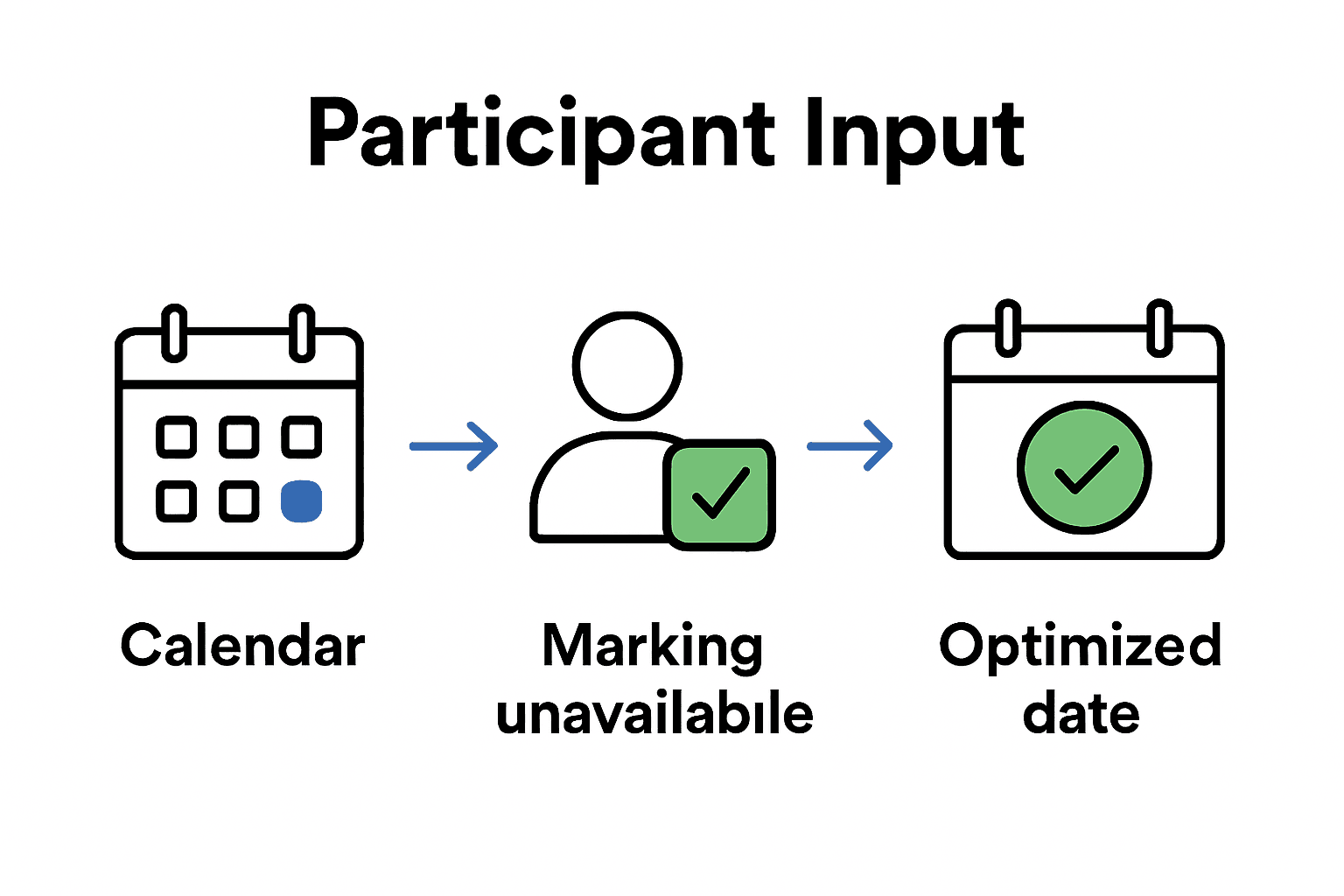
Pro tip: Set a clear deadline for input and send gentle reminders. People get busy, and you want to ensure comprehensive participation without becoming a nuisance. A single follow-up message 48 hours before your final deadline usually works best. By making the process straightforward and respectful of participants time, you increase the likelihood of getting accurate and complete scheduling information.
Once you have collected everyone inputs, you will be ready to identify the optimal meeting window that accommodates the most participants.
Step 4: Assign roles and confirm responsibilities
Successful group events require clear role assignments that leverage each participant's strengths. Systematic scheduling approaches demonstrate how strategic resource allocation can transform event planning from chaotic to coordinated.
Start by mapping out all necessary tasks and matching them to participants based on their skills and availability. Complex scheduling models emphasize the importance of understanding individual capabilities and constraints. For a family reunion, this might mean assigning someone with photography skills to document memories, while another person handles meal planning. In a corporate retreat, you could designate team members to manage logistics, communication, activity planning, and budget tracking.

Pro tip: Create a shared document that clearly outlines each person's responsibilities, including specific tasks, deadlines, and expected outcomes. This transparency eliminates confusion and ensures everyone understands their commitments. Include a quick communication channel where team members can ask questions or request support. By setting clear expectations upfront, you minimize last minute surprises and create a collaborative environment where everyone feels engaged and accountable.
With roles assigned and responsibilities confirmed, you are now ready to move forward with detailed event preparation.
Step 5: Verify scheduling and finalize event details
Flexible scheduling optimization models reveal the importance of carefully reviewing every aspect of your event plan before making final commitments. This critical verification stage ensures that all logistical elements align perfectly with your original objectives.
Review each confirmed detail systematically. Check participant availability, confirm assigned roles, validate venue logistics, and cross reference everyone's understanding of event expectations. Dynamic activity scheduling research suggests creating a comprehensive timeline that accounts for potential variations and contingencies. For corporate events, this means verifying technology needs, catering requirements, and presentation schedules. For family gatherings, double check travel arrangements, accommodations, and shared activity preferences.
Pro tip: Create a master document that serves as a single source of truth for all event details. Include contact information, specific responsibilities, critical timelines, and any special requirements. Share this document with all participants and request a final confirmation. This approach minimizes last minute confusion and provides everyone a clear reference point.
With all details verified and confirmed, you are now prepared to move into the final execution phase of your event planning journey.
Simplify Your Group Event Planning with WhenNOT
Planning group events can quickly become overwhelming when trying to pinpoint the best dates and coordinate everyone's availability. The article highlights key challenges like managing unavailable dates through inverse scheduling, gathering participant input efficiently, and assigning roles clearly. These pain points can cause delays and frustration, especially when juggling multi-day or flexible events.
WhenNOT tackles these exact challenges by asking participants to mark when they are not available rather than when they are free. This simple yet powerful approach reduces endless back-and-forth communication, saves precious planning time, and boosts participant engagement by making input easy and private. Whether you are organizing a family reunion or a corporate retreat, WhenNOT lets you visualize everyone's busy days in one place, helping you select the optimal date effortlessly.
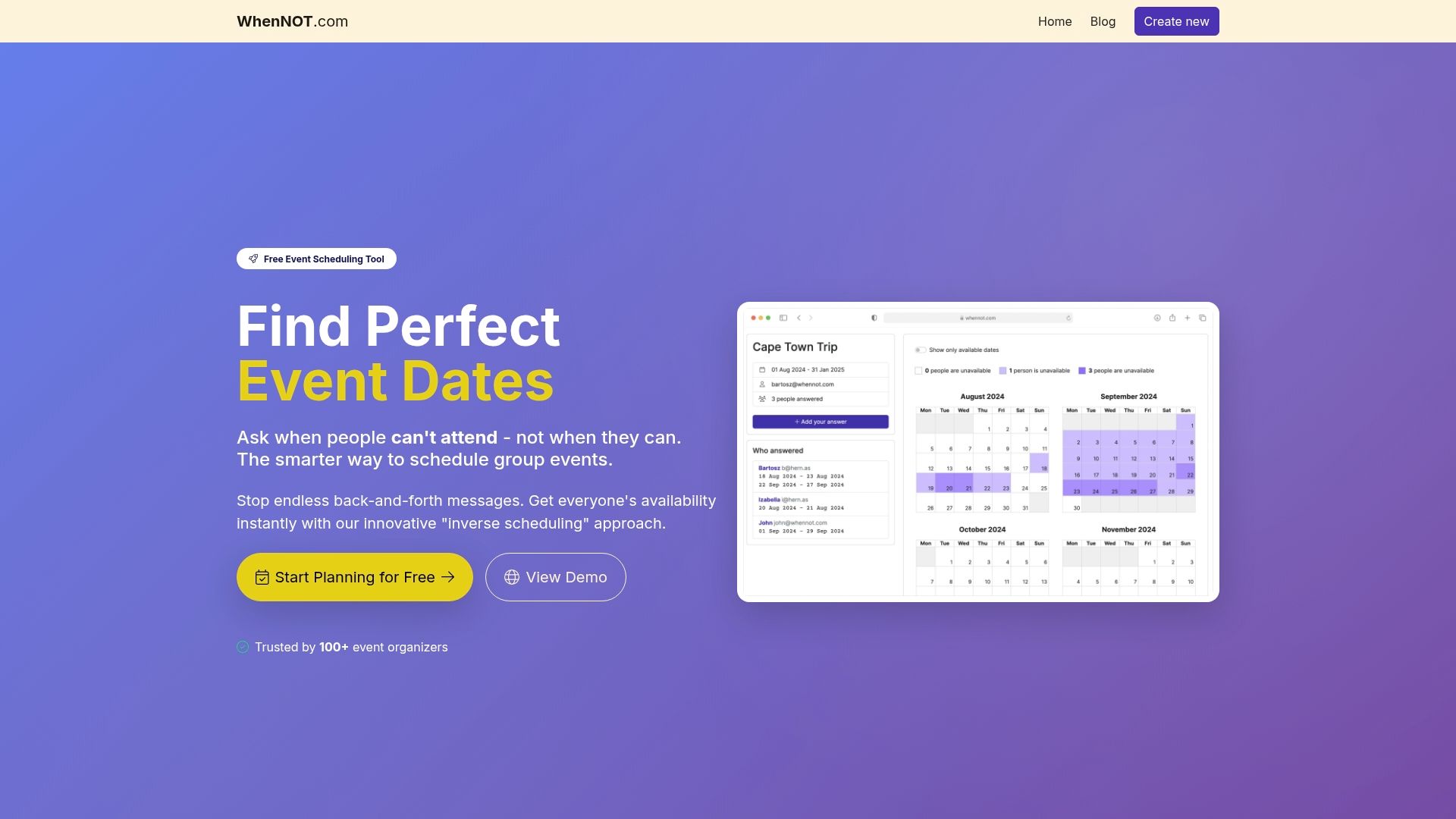
Ready to transform your event planning experience Start optimizing your group scheduling now with WhenNOT and discover how smooth selecting dates can be. Don’t let scheduling conflicts stall your event’s success Visit WhenNOT today and streamline your planning from start to finish. For more on mastering scheduling strategies check out this Group Event Logistics Guide and see how WhenNOT is designed for your needs.
Frequently Asked Questions
How do I define objectives for my group event?
To define objectives, identify what you want participants to experience and what specific outcomes you aim to achieve. Create a simple spreadsheet to track these objectives and refer back to them throughout planning to ensure alignment.
What is inverse scheduling, and how can it help with event planning?
Inverse scheduling is a method where you identify when participants are unavailable instead of trying to find when they are available. Begin by establishing a date range and ask participants to mark their unavailability, which will help you pinpoint optimal times for your event.
How can I streamline participant input for scheduling?
To streamline participant input, use a simple platform that allows easy marking of unavailable dates without complex registration. Set a clear deadline for responses and send reminders to ensure maximum participation and accurate scheduling information.
How do I assign roles and responsibilities for my event?
Assign roles by mapping out necessary tasks and matching them to participants based on their skills. Create a shared document that outlines each person's responsibilities and deadlines to eliminate confusion and promote accountability.
What should I check before finalizing event details?
Before finalizing details, systematically review participant availability, confirm assigned roles, and validate venue logistics. Create a master document with all critical event information to minimize confusion and ensure everyone is on the same page.
Recommended
- Ultimate Event Planning Checklist for Successful Gatherings - WhenNOT Blog
- Group Event Organization Process: Complete Guide - WhenNOT Blog
- 7 Habits of Successful Event Organizers You Should Adopt - WhenNOT Blog
- 7 Essential Team Coordination Tips for Smooth Group Planning - WhenNOT Blog
- What Are Event Logistics? Complete Industry Guide - team I
- Workflow for Luxury Event Coordination: Step-by-Step Success - Winelands Function – For Every Occasion, Your Celebration