
More than 60 percent of American group travelers report that scheduling conflicts are their biggest headache. Planning trips with friends or colleagues often means untangling a mess of overlapping calendars, personal preferences, and unexpected last-minute changes. Understanding how group scheduling works can turn chaos into smooth coordination and help every traveler feel valued. This guide shines a spotlight on smarter planning strategies that make American group adventures more memorable and less stressful.
Table of Contents
- What Scheduling Means For Group Travel
- Methods And Tools For Coordinating Dates
- Benefits Of Inverse Scheduling Approaches
- Common Challenges In Group Trip Planning
- How To Avoid Group Travel Scheduling Mistakes
Key Takeaways
| Point | Details |
|---|---|
| Centralized Scheduling | Streamlines group travel by synchronizing availability and reducing miscommunication among participants. |
| Digital Tools for Coordination | Utilize digital platforms and collaborative tools to simplify planning and enhance real-time collaboration. |
| Inverse Scheduling Advantages | Focus on unavailable times to reduce conflicts and enhance participant flexibility in planning. |
| Effective Communication | Establish clear channels and regular meetings to mitigate scheduling mistakes and ensure collective input is valued. |
What Scheduling Means for Group Travel
Group travel scheduling transcends simple date planning. It represents a strategic framework that transforms complex multi-person logistics into seamless, coordinated experiences. Group scheduling fundamentally involves synchronizing multiple travelers' availability, preferences, and constraints to create an optimal travel plan.
At its core, scheduling for group travel means carefully orchestrating multiple moving parts. Centralized scheduling enables quick responses to changes and improves overall coordination, reducing potential miscommunication risks. This approach allows travel organizers to consolidate traveler information efficiently, creating a comprehensive overview that supports better decision-making.
Key scheduling considerations for successful group travel include:
- Aligning arrival and departure times
- Coordinating accommodation logistics
- Managing shared transportation requirements
- Balancing individual preferences with group constraints
Effective scheduling ensures synchronized logistics across flight arrivals, hotel check-ins, and event schedules, dramatically enhancing the overall attendee experience. By treating scheduling as a dynamic, collaborative process, groups can minimize potential friction points and maximize travel enjoyment. The goal isn't just managing times and dates, but creating a harmonious collective journey where every participant feels their needs are thoughtfully considered.
Methods and Tools for Coordinating Dates
Group travel date coordination requires strategic approaches and intelligent technological support. Event scheduling involves selecting suitable times by considering participants' availability and potential date impacts, transforming complex logistical challenges into manageable processes. Modern travelers have multiple methods to streamline their planning, ranging from digital platforms to collaborative communication tools.
Digital scheduling tools have revolutionized group travel coordination by offering features that simplify complex planning scenarios. These technologies enable real-time collaboration, allowing travelers to synchronize their schedules efficiently. Scheduling software automates schedule creation, tracks various time-offs, and provides real-time updates, dramatically reducing administrative burdens.
Key methods for coordinating dates include:
- Shared online calendars
- Collaborative scheduling platforms
- Polling and voting tools for date selection
- Integrated communication channels
- Automated conflict resolution systems
Successful date coordination requires a combination of technological tools and human flexibility. While software can suggest optimal times, groups must remain adaptable and willing to compromise. The most effective scheduling approaches balance technological efficiency with personal communication, ensuring every participant feels heard and considered in the final travel plans.
Benefits of Inverse Scheduling Approaches
Inverse scheduling represents a paradigm shift in group travel coordination, fundamentally reframing how participants approach date selection. Joint decision-making methodologies capture the complex process behind group activity selections, offering unprecedented insights into collective scheduling behaviors. This approach transforms traditional scheduling from a linear, often frustrating process into a more collaborative and flexible experience.

Inverse scheduling flips the conventional planning model by focusing on participants' unavailable times rather than their available windows. This subtle yet powerful shift dramatically reduces scheduling friction. Advanced routing and appointment scheduling techniques minimize travel and idle times while considering service and travel time variability, creating more efficient and adaptive planning strategies.
Key benefits of inverse scheduling approaches include:
- Reduced communication overhead
- Enhanced participant flexibility
- More transparent scheduling processes
- Decreased scheduling conflicts
- Improved group decision-making efficiency
The true power of inverse scheduling lies in its human-centric design. By acknowledging that people's schedules are complex and dynamic, this approach creates a more empathetic and realistic framework for group travel planning. It recognizes that scheduling is not about finding perfect times, but about navigating individual constraints with mutual understanding and compromise.
Common Challenges in Group Trip Planning
Group travel planning is an intricate puzzle with numerous potential pitfalls that can derail even the most well-intentioned trips. Each participant brings unique schedules, preferences, and constraints, creating a complex web of coordination challenges that require strategic navigation and patience.
Scheduling complexity emerges as the primary obstacle in group travel arrangements. Coordinating departure and arrival times is crucial to minimize delays and enhance the travel experience, demanding clear communication and meticulous organization among group members. The more participants involved, the exponentially more difficult synchronization becomes.
Key challenges in group trip planning include:
- Conflicting personal schedules
- Varying budget constraints
- Different travel preferences and comfort levels
- Communication gaps
- Logistical synchronization difficulties
- Unexpected individual constraints
Successful group travel requires a delicate balance between individual needs and collective goals. Effective planners recognize that flexibility is not just a strategy but a necessity. By anticipating potential friction points, maintaining open communication, and developing contingency plans, groups can transform scheduling challenges into opportunities for collaborative problem-solving and shared experiences.
How to Avoid Group Travel Scheduling Mistakes
Successful group travel scheduling requires a proactive and strategic approach that anticipates potential complications before they disrupt plans. The difference between a smooth trip and a logistical nightmare often lies in the preparatory steps taken during the initial planning phases.
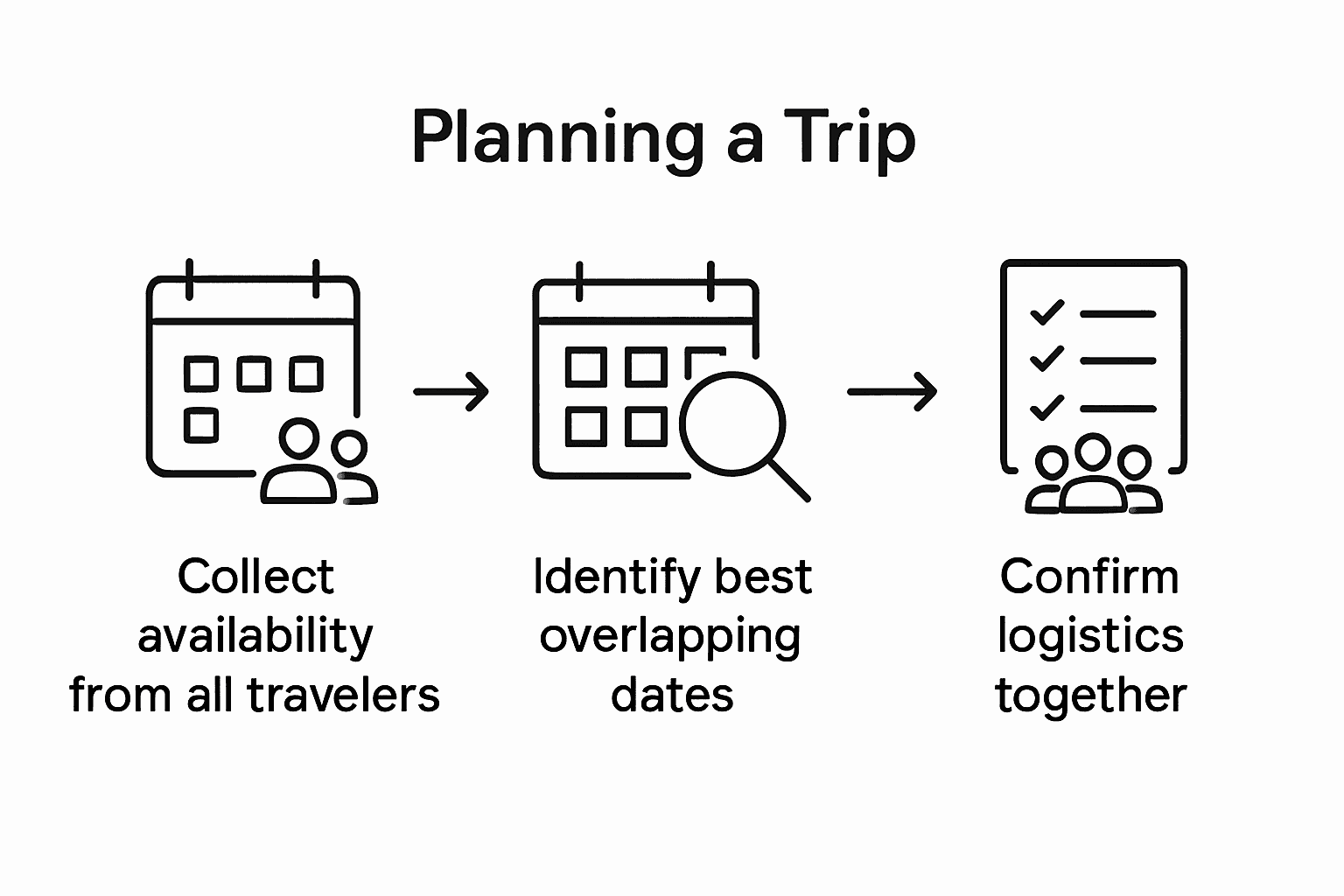
Regular group meetings facilitate collaborative decision-making, allowing discussions on plans, logistics, and task assignments, thereby reducing scheduling errors and enhancing overall coordination. Preventative communication becomes the cornerstone of effective group travel planning, helping teams identify and resolve potential conflicts early.
Key strategies to avoid scheduling mistakes include:
- Establish clear communication channels
- Create shared digital planning documents
- Set realistic deadlines and expectations
- Develop flexible backup plans
- Assign specific planning responsibilities
- Conduct periodic check-ins and progress reviews
- Utilize collaborative scheduling technologies
Ultimately, successful group travel scheduling is about balancing structure with adaptability. By creating a framework that allows for individual input while maintaining collective goals, groups can navigate the complex landscape of multi-person travel planning. The most effective teams approach scheduling as a collaborative process, where each member's perspective is valued and potential obstacles are addressed proactively and creatively.
Simplify Your Group Travel Scheduling with WhenNOT
The article highlights how complex scheduling challenges and conflicting participant availability can stall group travel plans. It pinpoints the need for flexible, transparent, and human-centric solutions like inverse scheduling to reduce miscommunication and ease coordination. If you have ever felt overwhelmed balancing multiple schedules or struggled with traditional methods that ask when people are available, you know how time-consuming and frustrating the process can be.
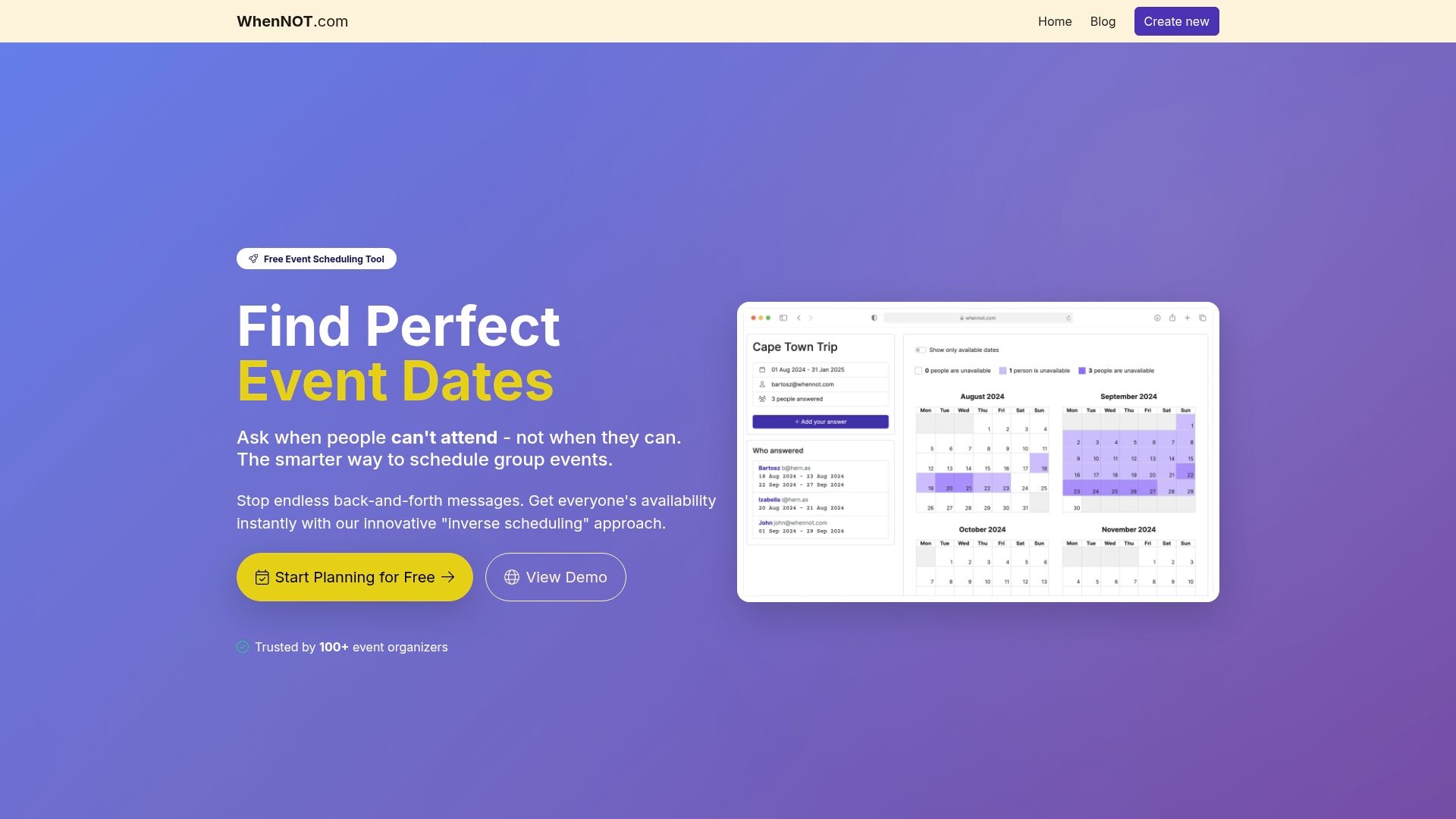
Discover how WhenNOT transforms group travel planning using an inverse scheduling approach that asks participants when they are not busy instead of when they are free. This intuitive system saves you from endless back-and-forth communication by visualizing everyone's busy dates simultaneously. Whether you are organizing a family trip, corporate retreat, or a multi-day group event, WhenNOT ensures fast, private, and hassle-free scheduling with no signup required. Make coordination effortless and secure your group’s ideal travel dates today by visiting WhenNOT and start planning smarter now.
Frequently Asked Questions
What is the importance of scheduling in group travel?
Scheduling is crucial in group travel as it coordinates multiple travelers' availability, preferences, and logistics, ensuring a smoother and more enjoyable travel experience.
How can digital tools improve group travel scheduling?
Digital tools enhance group travel scheduling by allowing real-time collaboration, automating schedule creation, and providing updates, which helps reduce administrative burdens and miscommunication.
What are common challenges faced in group travel scheduling?
Common challenges include conflicting personal schedules, differing budget constraints, communication gaps, and logistical synchronization difficulties among participants.
How can I avoid scheduling mistakes when planning a group trip?
To avoid scheduling mistakes, establish clear communication, create shared planning documents, set realistic deadlines, develop flexible backup plans, and conduct regular check-ins to address potential conflicts early.
Recommended
- Understanding the Benefits of Group Scheduling - WhenNOT Blog
- Understanding Why Choose Group Scheduling for Events - WhenNOT Blog
- Mastering Best Group Scheduling Practices for 2025 - WhenNOT Blog
- Understanding the Group Scheduling Process for Events - WhenNOT Blog
- When to Schedule Your Move: Essential Guidance for 2025 in the North East | Schott Removals